
TerraForums - Carnivorous Plant Community
You are using an out of date browser. It may not display this or other websites correctly.
You should upgrade or use an alternative browser.
You should upgrade or use an alternative browser.


Can we see some updates? I've got one coming and I would love to see how these plants turned out!!

Dexenthes
Aristoloingulamata
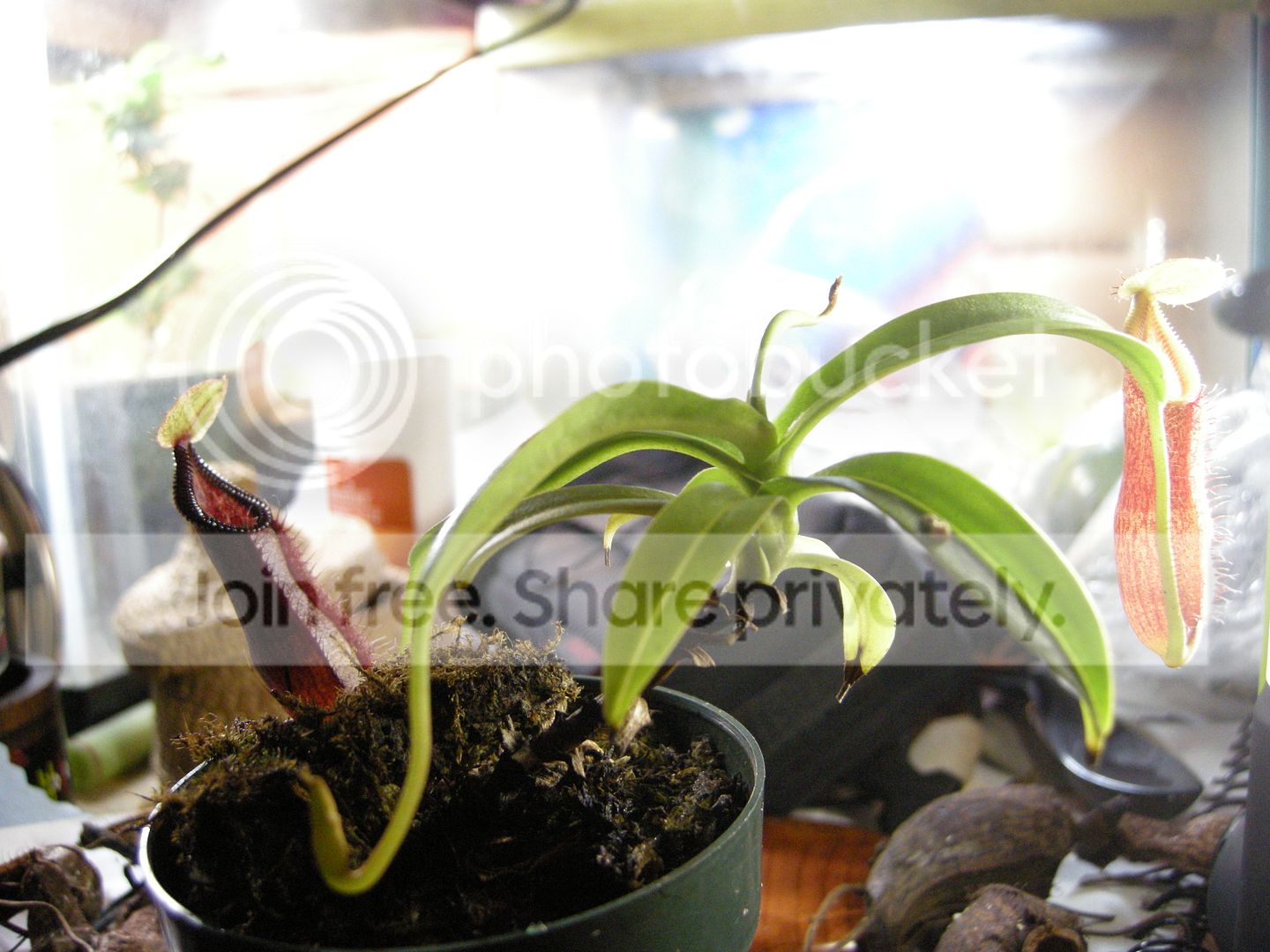
So it has been the better part of three years since I received this plant.
I'm not sure if it is my husbandry skills or if it is the DNA in this plant, but as you can see it is not exactly all that much bigger than when I received it. Perhaps I have a miniature form of this cross, or perhaps I am good at growing bonsai Nepenthes.
I'm curious to see how other people's plants have been coming along.
I'm not sure if it is my husbandry skills or if it is the DNA in this plant, but as you can see it is not exactly all that much bigger than when I received it. Perhaps I have a miniature form of this cross, or perhaps I am good at growing bonsai Nepenthes.


I'm curious to see how other people's plants have been coming along.


I'm not sure if it is my husbandry skills or if it is the DNA in this plant, but as you can see it is not exactly all that much bigger than when I received it.
Its the nature of this cross - it doesn't get very big. I have two plants of it and neither has made a pitcher larger than 4.5 inches tall. I'm underwhelmed by it.
That cross with hamata red hairy looks great. Mine unfortunately shrunk down to half the size then made a basal and aborted the main growth point. Luckily i saw what was happening and removed the main growth and tried rooting it with what looks like some success and the basal is returning to the original size so im very happy with it.
I cant say that i find the cross with hamata to be very attractive. The teeth are not as well developed as i Thought but luckily the cross with the red hairy one looks fantastic
I cant say that i find the cross with hamata to be very attractive. The teeth are not as well developed as i Thought but luckily the cross with the red hairy one looks fantastic
Dexenthes
Aristoloingulamata
Its the nature of this cross - it doesn't get very big. I have two plants of it and neither has made a pitcher larger than 4.5 inches tall. I'm underwhelmed by it.
Well even your description as well as jurow's pics are significantly larger than my plant. My pitchers only stand two inches tall. I like small Nepenthes so I am not too upset. Maybe it needs a repot or a fertilize or something.
That N. singalana x RHH is certainly something else though!

your burgundy hamata, is one of the prettiest one i've seen. Is that pretty normal for it turn red like that?Dexenthes
Lets keep in mind as well that the so-called "red hairy hamata" is almost certainly a distinct species - we just need one of the taxonomists to say so. ;-) But the differences are obvious in how it behaves in breeding. (see above)

Yes - interesting that none want to tackle what appears to be 'obvious'.Lets keep in mind as well that the so-called "red hairy hamata" is almost certainly a distinct species - we just need one of the taxonomists to say so. ;-) But the differences are obvious in how it behaves in breeding. (see above)
 It would appear to be much easier than trying to separate the various plants of SE Asia...


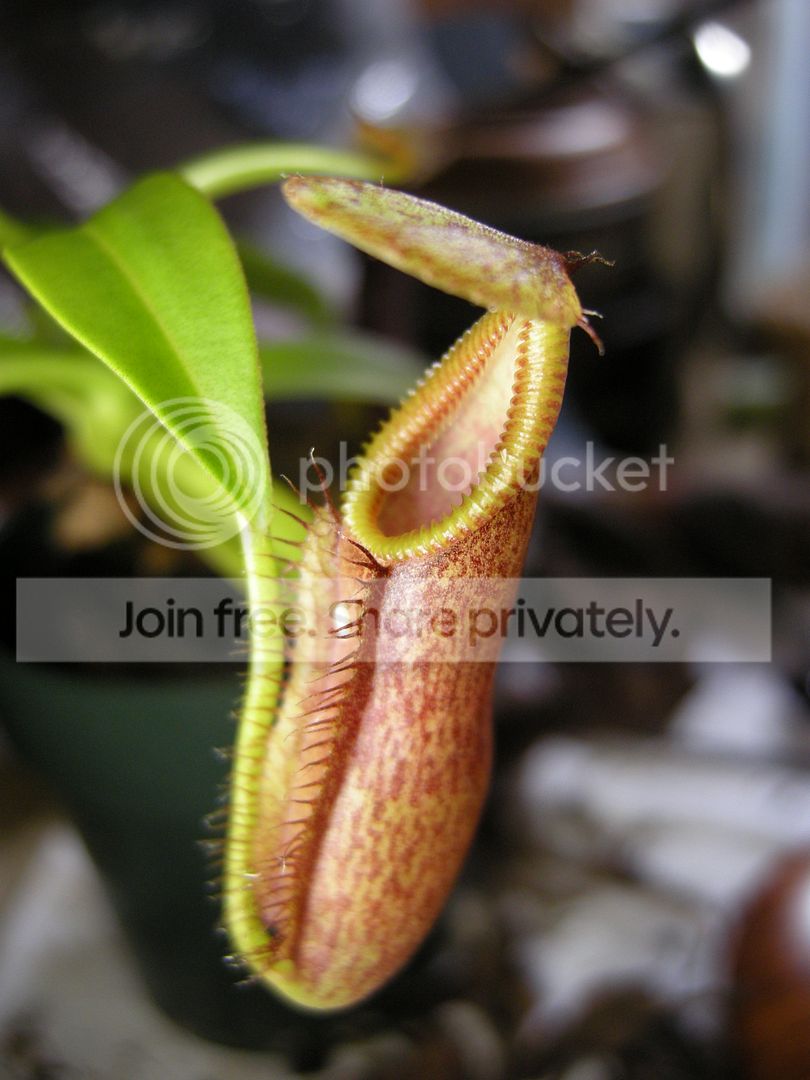
This is my favorite shade that the pitchers get, just before they are totally darkened up. Nice deep red coloration.
Some can say what they will, but I dig this cross. Especially its tininess.
What's there not to like?

The latest pitcher on my singalana x RHH:

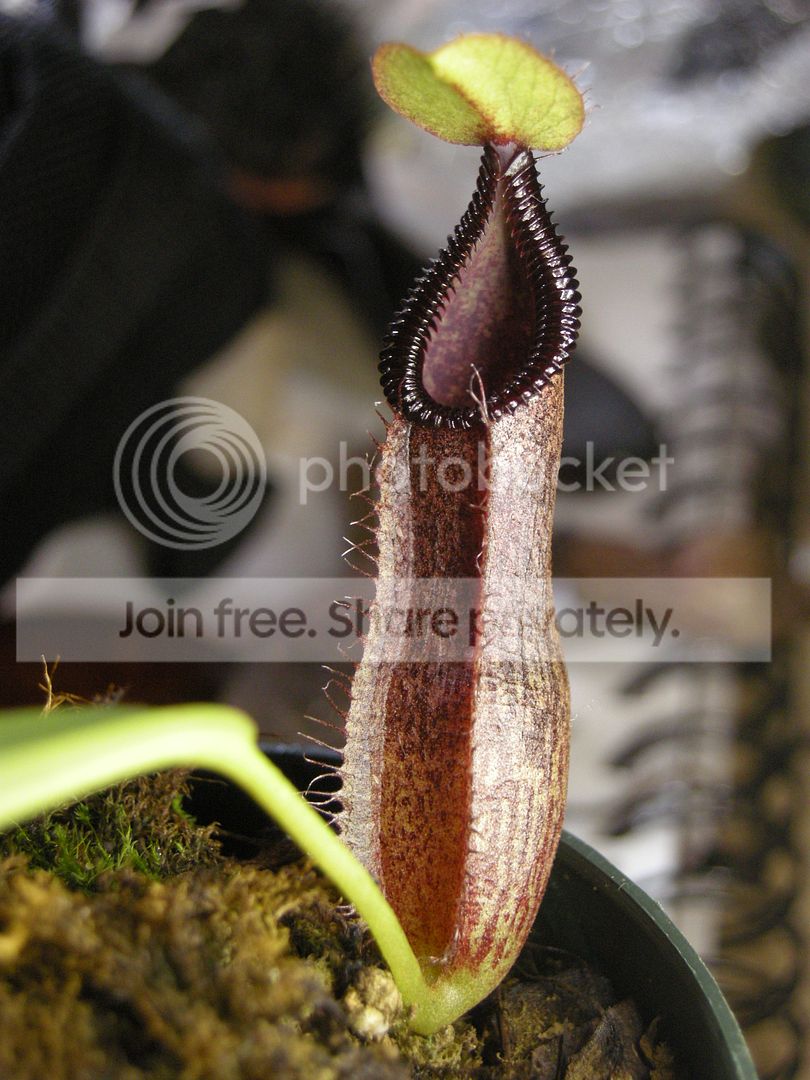
Over time the peristome gains this blood-red color that I really like (the photo does not really do it justice):

Edit: added name
Last edited:
are you sure your plant isn't N. singalana x "red hairy hamata"?
I agree.
Thats the RHH version, guaranteed.
Very nice plant, are you sure your plant isn't N. singalana x "red hairy hamata"?
Either way, it's gorgeous.
Woops forgot to add the name. It is indeed N. singalana x RHH