
TerraForums - Carnivorous Plant Community
You are using an out of date browser. It may not display this or other websites correctly.
You should upgrade or use an alternative browser.
You should upgrade or use an alternative browser.
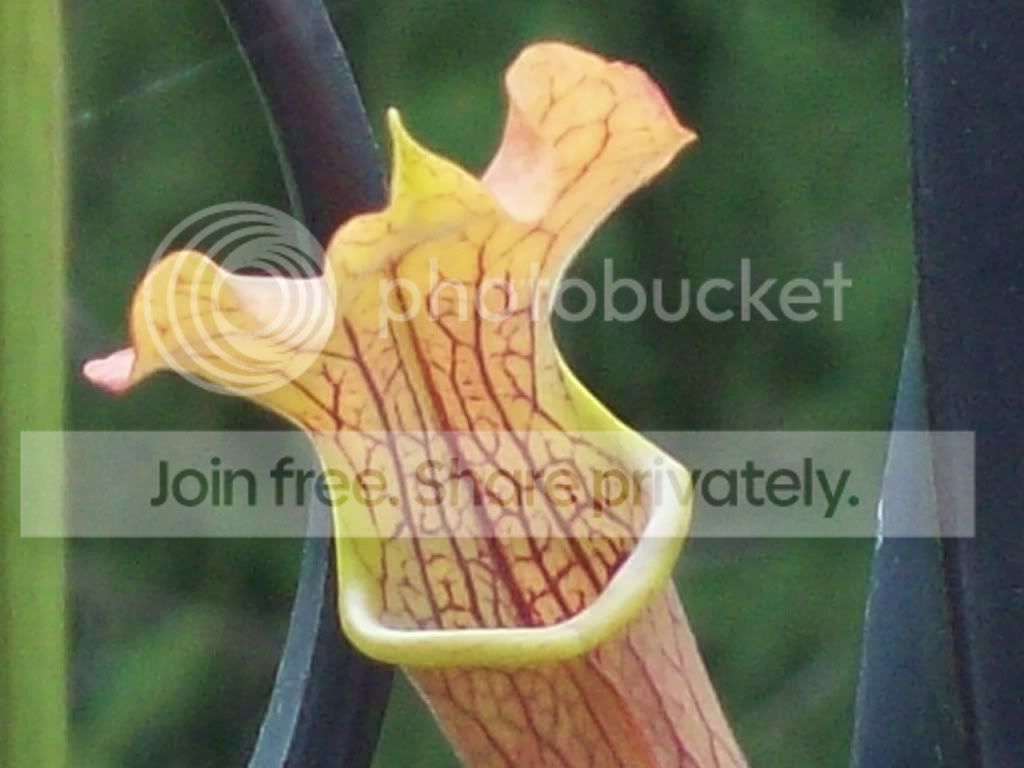

carnivoure12
Hear the Call of Nepenthes
I'sd say its a sarracenia 

Where did you get it?
Edit: oops that's against the rules.
If it feels "pubescent" (is covered in peach fuzz) and the pitchers never get rigid its probably S. rubra ssp. of some kind or a hybrid of rubra. S. rubra ssp. alabamensis is very wildly distributed/ cultivated because it is currently in tissue culture. If you got it from Lowe's it might be rubra ssp. rubra.
Edit: oops that's against the rules.
If it feels "pubescent" (is covered in peach fuzz) and the pitchers never get rigid its probably S. rubra ssp. of some kind or a hybrid of rubra. S. rubra ssp. alabamensis is very wildly distributed/ cultivated because it is currently in tissue culture. If you got it from Lowe's it might be rubra ssp. rubra.
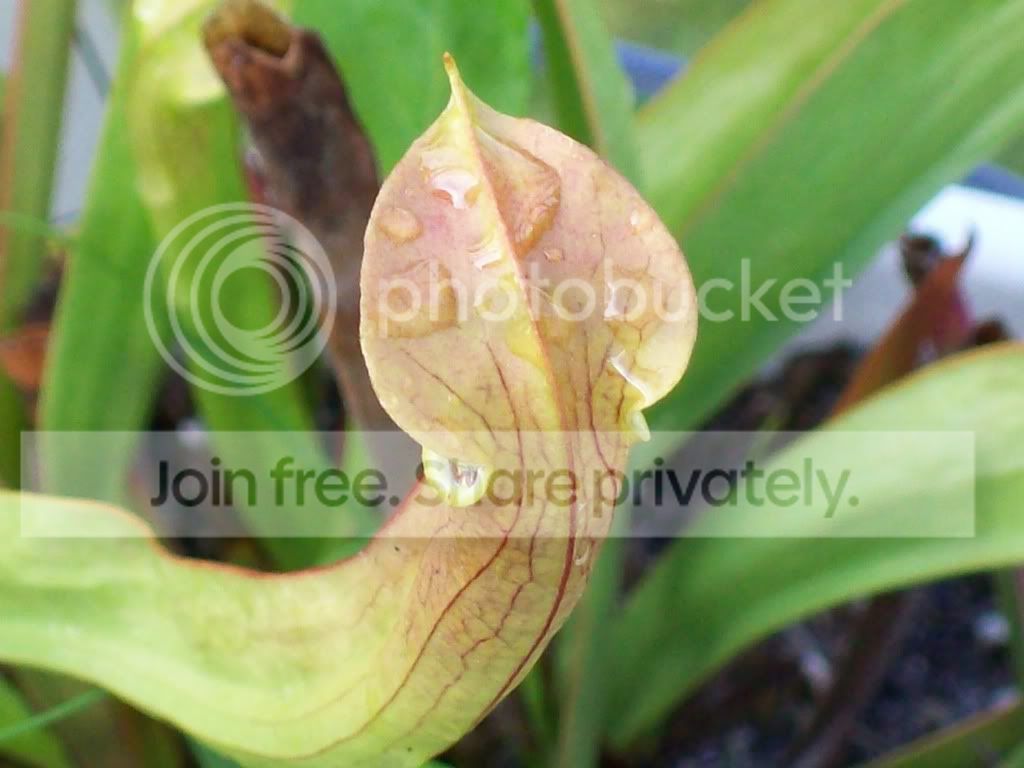
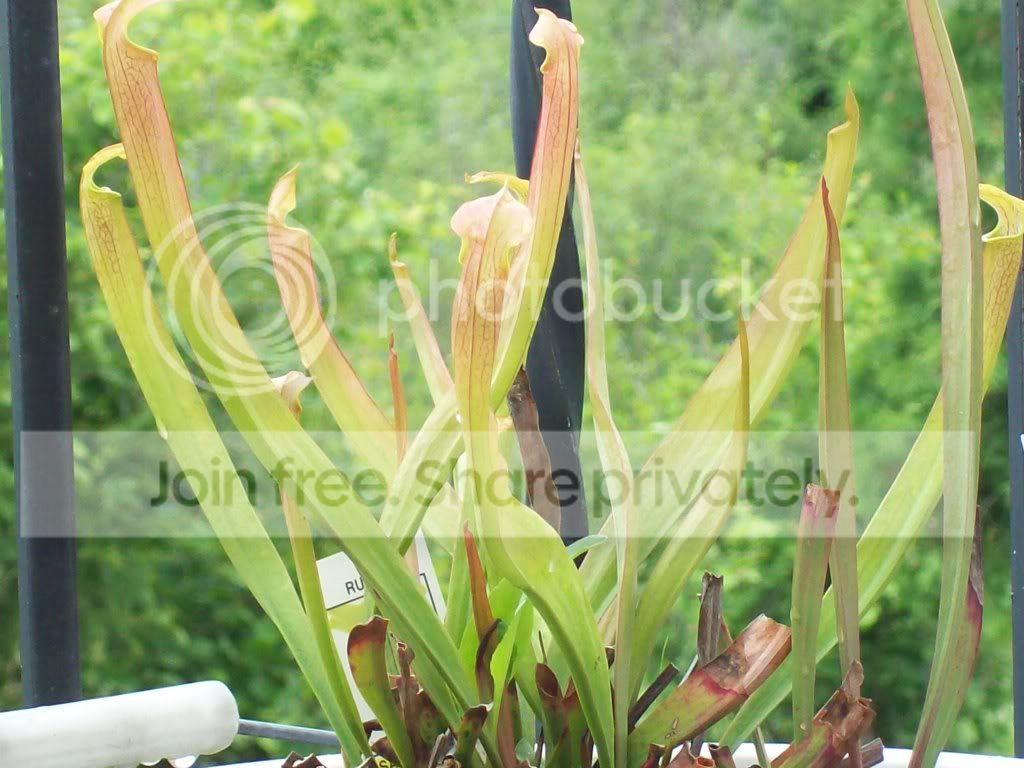

That's a pot tag from the tissue culture facility. Hold one of the pitchers up to the light. ssp. alabamensis has very very faint "windows" in the back of the throat.


seedjar
Let's positive thinking!
Looks like one of the smaller ones to me, but I could be wrong. What's the scale on those photos, Jim? The second one looks like it couldn't be much more than eight inches high, judging by the tag. Looks like the same style tag that my first DeRoos' N. "Alata" came with, actually. I understand that there are some generic rubra hybrids circulating, as well - it could be that your plant isn't specific to one of the named subspecies.
~Joe
~Joe
Deroose doesn't do Sarracenia... They don't do pot stakes either.
Looks like one of the smaller ones to me, but I could be wrong. What's the scale on those photos, Jim? The second one looks like it couldn't be much more than eight inches high, judging by the tag. Looks like the same style tag that my first DeRoos' N. "Alata" came with. I understand that there are some generic rubra hybrids circulating, as well - it could be that your plant isn't specific to one of the named subspecies.
~Joe

If they buy them from AG3 they come with the stakes/tags.


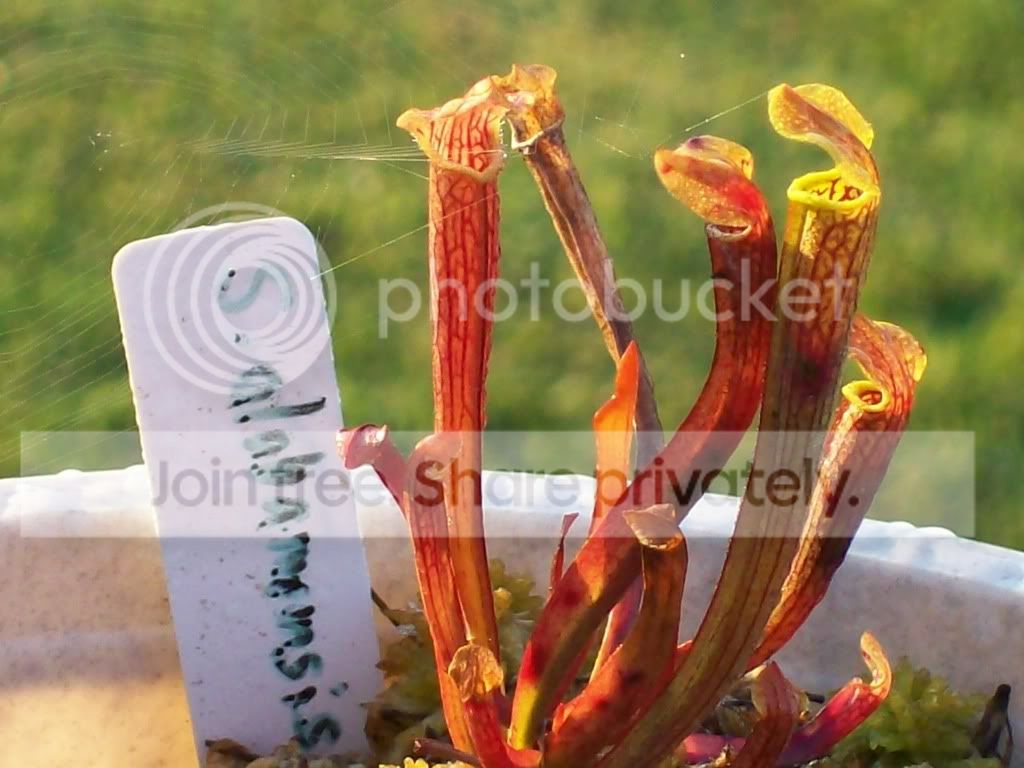
if i had to make a guess, i'd say wherryi too. but there's always gonna be specimens that don't fit the artificial boundaries us humans have made.
Serious? He has a tag from agristarts. Check for areoles Jim.
if i had to make a guess, i'd say wherryi too. but there's always gonna be specimens that don't fit the artificial boundaries us humans have made.

jimscott
Tropical Fish Enthusiast
I had to google the word, 'areole'.
LOL! I still don't know what to look for!
Areoles are the distinctive feature of cacti, and identify them as a separate family from other succulent plants. Areoles give rise to spines or, on certain cacti, small, detachable glochids which are an additional form of protection. The areoles on cacti are clearly visible. They generally appear as small light to dark colored bumps, out of which grow clusters of spines.
Areoles represent highly specialized branches on cacti. They are believed to have evolved as vestigial leaves of cacti which were modified into spines over time. Thus, the branches became reduced to buds which give rise to the spines. This means that as cacti adapted and evolved to the desert climate, over time they got rid of branches and leaves, which were converted into areoles and spines to protect the plants, and to reduce water loss.
Some cacti lack spines on their areoles, but instead, (as said above) utilize small, detachable glochids which resemble small, sharp splinters and are very difficult to remove from the skin.
LOL! I still don't know what to look for!