
Hi all
I was gifted a wardian case for Christmas and figured I'd try and turn it into a nep and drosera terrarium. When I used to live I the UK it was easy to grow a number of plants in plastic propagators on our windowsills with the central heating.
However, I now live in NZ. Lots of cps aren't available due to biosecurity, and many that are are rare and very expensive. Add on to this very bright sunlight (hole in the ozone layer etc) and poorly insulated houses with small windowsills, options are a lot more limited.
Despite this, I figured I'd try a lowland nep (ampullaria), and drosera adelae, away from a window and using an LED light setup.
Given the cost of the plants I'm looking for advice and or reassurance the set up should work.
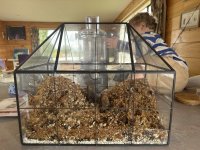
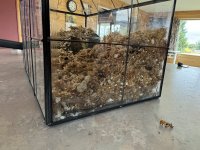
Theres a pumice base for some drainage, and then the substrate is mostly LFS with pumice and a little washed orchid bark thrown in. It will be topped off with green sphagnum and milk moss next week and hopefully the light should arrive next week also.
The plan is to put the ampullaria on the left side, whilst on the right side I've put a food grade plastic tray under the moss to act as a water reservoir, as I believe the drosera adelae likes to sit in a little water.
My main concern is that I should probably fill the tray with pumice or perlite. As it is there's moss in there, so I'm imagining that the moss might just wick the water out and saturate the tank anyway? With a layer of pumice in there this might reduce the effect? Anyone with experience of a similar set up?
I was gifted a wardian case for Christmas and figured I'd try and turn it into a nep and drosera terrarium. When I used to live I the UK it was easy to grow a number of plants in plastic propagators on our windowsills with the central heating.
However, I now live in NZ. Lots of cps aren't available due to biosecurity, and many that are are rare and very expensive. Add on to this very bright sunlight (hole in the ozone layer etc) and poorly insulated houses with small windowsills, options are a lot more limited.
Despite this, I figured I'd try a lowland nep (ampullaria), and drosera adelae, away from a window and using an LED light setup.
Given the cost of the plants I'm looking for advice and or reassurance the set up should work.
Theres a pumice base for some drainage, and then the substrate is mostly LFS with pumice and a little washed orchid bark thrown in. It will be topped off with green sphagnum and milk moss next week and hopefully the light should arrive next week also.
The plan is to put the ampullaria on the left side, whilst on the right side I've put a food grade plastic tray under the moss to act as a water reservoir, as I believe the drosera adelae likes to sit in a little water.
My main concern is that I should probably fill the tray with pumice or perlite. As it is there's moss in there, so I'm imagining that the moss might just wick the water out and saturate the tank anyway? With a layer of pumice in there this might reduce the effect? Anyone with experience of a similar set up?


