What's new
TerraForums - Carnivorous Plant Community

Welcome to TerraForums — a long-running carnivorous plant community established in 2001. Register for free to join the conversation, ask questions, and connect with growers from around the world.

NASC Auction will open in...

Read the rules first :)
NASC auction is OPEN!!

P.longifolia ; P.poldinii , P.brevifolia ( P.caussensis)

I have been cultivating species for some time, and I have also been to see them 'in situ' to learn about their living conditions.not much organic residue in their environments
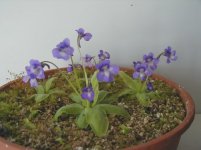
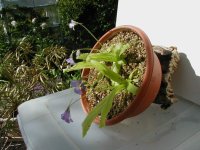
P.longifolia
LONG.jpg

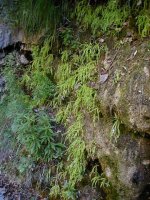
in situ

in situ anisclo_jpeg.jpg

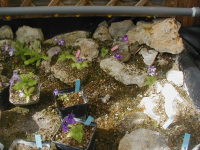
P.poldinii

ext 1.png

top right
in situ
poldinii6.JPG

P.brevifolia ( P.caussensis)

causensis.JPG

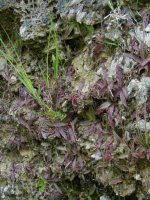
in situ

caus 09.JPG

why I call this species P.brevifolia : since 1893 it is known in France where it was described ,in the years 1966 and 2016 it was transformed into P caussensis without taking into account its anteriority

jeff
 
All that moss and algae coating the walls and in the cracks in situ isn't organic material? Never minding that, there are usually multiple techniques people can use to successfully grow a species in cultivation (particularly because a cultivated environment is not wild, and thus isn't experiencing all the same pressures as wild), and the internet is rife with examples of people growing these species with fairly organic-heavy soil mixes. Just because reflecting the mineral substrate alone found in nature happens to work, doesn't mean that other methods don't.
And if the taxonomic experts determined a name was invalid for use, it's probably invalid for a reason (particularly if the name being referenced here...never actually existed, because it was published as both a longifolia and a vulgaris subspecies before being invalidated, not a species of its own; this is from that 1893 publication being referenced, by Genty, I assume?). Anteriority isn't a word that involves anything taxonomic or hierarchical, so unsure what that's actually trying to reference, but Casper would certainly have had access to the type specimens and information concerning "brevifolia" and had to have discarded it for a purpose. Perhaps an invalid specimen or lack of type, etc.
 
HUNTSMANSHORN

P.longifolia has 2 types of leaves, one in spring and one in summer( in winter she make hibernacula), from what I have seen 'in situ' it always grows on vertical limestone cliffs.

the prey differs between spring and summer, it has adapted to that.

for my part I always tilt my pots or cups to reach these long leaves
 
HCARLTON

at the root level there is no organic residue
Of course everyone cultivates plants in their own way, for my part I chose to get as close as possible to their condition 'in situ'
From a taxonomic point of view, the notion of anteriority exists, for my part I would keep this name of brevifolia which honors the one who discovered and described it in 1893,in the Tarn valley, Jonte gorge, Dourbie valley.Certainly in 1893 we did not describe the plants as we do today but nevertheless all the documents on this plant exist since 1805
 
Last edited:
Back
Top