Sure I'll send some out when there ready the glass jars contain pure cobalt instead of mercury due to serpentinite being in cobalt and mercury being a bit more toxic for outside.I will absolutely try that, do you plan to keep them inside all year? was that the intention with all the heavy metals with them?
TerraForums - Carnivorous Plant Community
You are using an out of date browser. It may not display this or other websites correctly.
You should upgrade or use an alternative browser.
You should upgrade or use an alternative browser.
Adding serpentinite to soil for darlingtonia?
- Thread starter DelSouth
- Start date
awesome! yeah that would be super cool. this whole thread is super interesting to me. I would love to give it a shot with the cobalt. I have never experimented with it.Sure I'll send some out when there ready the glass jars contain pure cobalt instead of mercury due to serpentinite being in cobalt and mercury being a bit more toxic for outside.

I have some magnificent advice for y'all, but since it's slightly off topic from this thread, I'm going to post a new one. Go check it out!
I’m waiting for my seeds to finish stratifying after a couple of weeks in the fridge. Just a heads up to anyone who is also doing the wet paper towel in the fridge technique — make sure your paper towel isn’t too wet. I was placing them on a fresh new one and accidentally soaked it in too much water. A couple days later, a few seeds turned black  I have germinated this way before last year and had no issues. Just dab a few drops of distilled water.
I have germinated this way before last year and had no issues. Just dab a few drops of distilled water.
Finally got the seeds out of the fridge. I decided to just place the dust and small rock chunks all in one pot rather than doing two separate pots. Someone recommended to me to just grow it in pure peat without perlite, so that’s what I’m using. Here is how I added serpentinite to the peat moss:
WEAR GOGGLES, CLOSED-TOED SHOES, AND GLOVES FOR THIS PART. EXTRA IMPORTANT: WEAR A MASK AND DONT BREATHE IN THE DUST FOR POTENTIAL ASBESTOS RISK. DONT DO THIS IF YOUR ROCK HAS ASBESTOS FIBERS.
- Placed the 7 oz rock on a wide sheet of bubble wrap outside
- Gently tapped with a hammer. It is quite brittle and barely needs any force. Does not really create sharp edges, but still be careful
- Took 4 small pieces and tapped those down further to get more dust
- Poured half the contents from the bubble wrap to a pot half filled with wet peat moss. Mixed it up and filled the rest with peat moss and the rest of the rock to mix it again
I took out a few medium small chunks just in case the concentration of serpentinite is too toxic for the seeds. I sprinkled the non-moldy seeds on top and covered the pot with plastic film with poked holes. They are currently sitting under a grow light in front of a light fan.
WEAR GOGGLES, CLOSED-TOED SHOES, AND GLOVES FOR THIS PART. EXTRA IMPORTANT: WEAR A MASK AND DONT BREATHE IN THE DUST FOR POTENTIAL ASBESTOS RISK. DONT DO THIS IF YOUR ROCK HAS ASBESTOS FIBERS.
- Placed the 7 oz rock on a wide sheet of bubble wrap outside
- Gently tapped with a hammer. It is quite brittle and barely needs any force. Does not really create sharp edges, but still be careful
- Took 4 small pieces and tapped those down further to get more dust
- Poured half the contents from the bubble wrap to a pot half filled with wet peat moss. Mixed it up and filled the rest with peat moss and the rest of the rock to mix it again
I took out a few medium small chunks just in case the concentration of serpentinite is too toxic for the seeds. I sprinkled the non-moldy seeds on top and covered the pot with plastic film with poked holes. They are currently sitting under a grow light in front of a light fan.
Last edited:
Already seeing some green sprouts on the tips. I did lose two to white fuzzy mold and another dead seed ended up covered in black mold. I am surprised they sprouted so quickly since the seeds are over a year old. I remove the plastic cover once a day for an hour to let the fan get some air flow in.

Sorry to hear they didn't make it but, at least, you have information that you have gained. Making Darlingtonia happy in Los Angeles might be a bit tricky but I'd bet it's worth the effort. Are you going to re-start from seeds?They died to the summer heat. I'm going to try the styrofoam cooler and water pump method next.
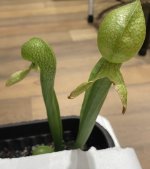
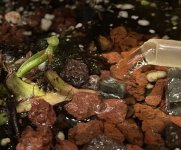
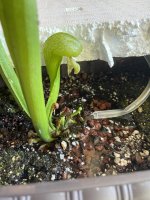
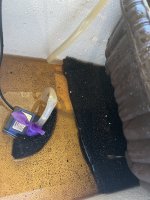
Here's an update 3 weeks later. This is a mature, one-foot typical. It's planted in roughly 70% red lava rock, 10% of the old serpentinite dust peat, 10% of the remaining serpentinite rock broken into larger pieces, and 10% perlite. The top peat is just the moss topping that came with the plant, but it's still majority rocky substrate. The styrofoam doesn't keep the water cool, and an ice pack only cools it to 60 F for 12~ hours. I stopped using an ice pack after the first two days. The highest water temp was 79 F indoors.
Since a few days ago, the tongues on the mature pitchers and one of the baby ones started browning a bit. I believe it was because I had the tube too close to the crown and was drowning the roots. I don't see browning tongue tips on 2 of the other baby pitchers. I'm trying to reintroduce the ice pack back every night, but if anyone knows what else is causing the brown tongues, please let me know.
Since a few days ago, the tongues on the mature pitchers and one of the baby ones started browning a bit. I believe it was because I had the tube too close to the crown and was drowning the roots. I don't see browning tongue tips on 2 of the other baby pitchers. I'm trying to reintroduce the ice pack back every night, but if anyone knows what else is causing the brown tongues, please let me know.
Attachments


Last edited:
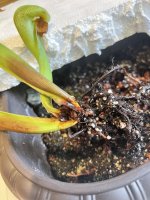
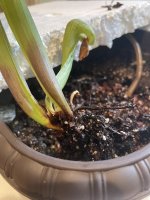
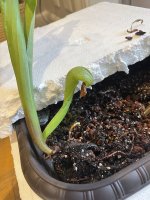
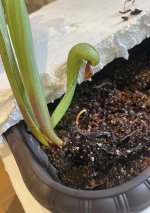
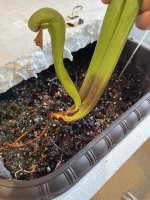
Unfortunate update, but my darlingtonia has rotted 95% through. The new pitchers stopped growing and started dying, but I didn't worry too much since the main rhizome was relatively green. I did turn down the pump flow to only slow drips since last time, but it might have still been too water logged. Or maybe it could not adjust to the high serpentinite toxicity after growing in a peat/perlite mix all its years.
There is a small bit left that's alive, but given that the mature pitchers are now browning and that I cannot trim all of the dead cork off, it's sure to die soon. I'm glad it was at least happy with me for a few weeks enough to put up 3 new baby pitchers. Back to the darlingtonia drawing board for next year's SCCPE sale 
There is a small bit left that's alive, but given that the mature pitchers are now browning and that I cannot trim all of the dead cork off, it's sure to die soon.
I'm glad it was at least happy with me for a few weeks enough to put up 3 new baby pitchers. Back to the darlingtonia drawing board for next year's SCCPE sale