What's new
TerraForums - Carnivorous Plant Community

Welcome to TerraForums — a long-running carnivorous plant community established in 2001. Register for free to join the conversation, ask questions, and connect with growers from around the world.

NASC Auction will open in...

Read the rules first :)
NASC auction is OPEN!!

Quick comparison between fertilized and non-fertilized Sarracenia rubra sbsp. rubra

So about a year and a half ago I started Some S. rubra sbsp rubra from seed from the ICPS seed bank, and at about 6 months I fertilized 1 of the 2 pots with osmocote 14-14-14 four month Flower and Vegetable plant food. I placed 5 pellets evenly apart in the pot, about a centimeter deep in the soil. These were the results(cat for scale):
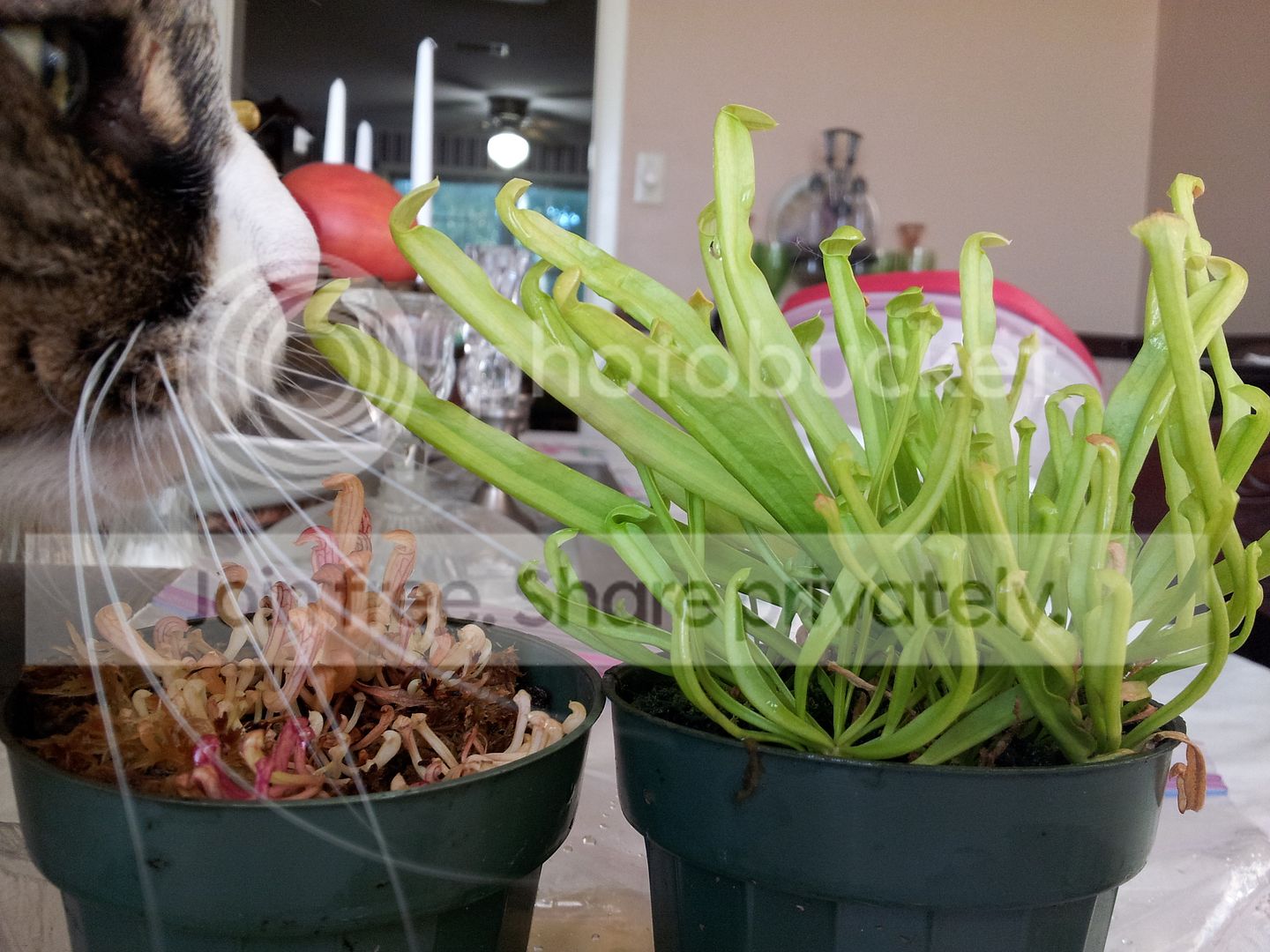

The pot on the left did not receive the fertilizer while the pot on the right did. This is by no means a scientific study as only 2 pots were used, but it clearly shows the difference between fertilized and non-fertilized plants. These plants are right next to each other and everything is the same beside the fertilization.
 
Last edited:
All exactly the same, right next to each other, same seed batch, soil, even pot, only difference was fertilization.
 
In older plants soil fertilization can occasionally cause rot, I've heard it's best to only do this with seedlings. I doubt if your plants are outside they really need fertilization but it could still help if they are young, but I have no experience there, anybody else know?
 
Hmm, I wonder why fertilization causes a decrease in anthocyanin production...

I think it may be because it is capable of putting to use all the sunlight it can use, since I believe (correct me if I'm wrong) anthocynin is often produced when a plant has more light than it needs. (trying to remember off the top of my head, could be wrong on this)
 
Last edited:
So something along the lines of it's absorbing as much sunlight as it can to grow with the fertilizer/ it needs more energy from the sun to produce the larger growth?
 
You are correct. Visible anthocyanin accumulation in your unfertilized seedlings may simply be a reaction to stress, or even the stress of not having the other nutrients necessary for it to complete the expansion of its leaves. In other words, though their genetic complement may be nearly the same, their phenotype expression shows the result of the "limiting factor" of the fertilizer-provided nutrition.
 
Last edited:
Back
Top